
Passive "Dehnu School"
National Competition
Overview:
Dehnu School project has an interdisciplinary approach, which combines the features of culture, health, and ethics in a context-aware and human-centered architecture. In 2016 we conducted a comprehensive analysis of the civic and economic structure of the Iranian village of Dehnu. The project area is a typically vast plain, surrounded with family houses, paddy fields, highway, existing buildings, two rivers, and Jebal Barez mountain chain. The region elevation is about 650-meters above the sea level. The weather is very warm in summer and temperatures are moderate in winter. It is one of the hottest places in Iran with considerable temperature changes in the day and night and also great agricultural & Beekeeping potentials.
Challenge:
The challenge was to investigate clever ideas integrating vernacular capabilities of the location (such as materials, construction technology, and labor) and to trust in locally existing resources available and apply them to a contemporary language focusing on - Natural cooling system - Natural daylight and Natural ventilation. Material Most of the construction materials used are source available: granite stones for the base, clay, palm trunks, palm leafs weaved, Griff-Aitch(Nannorrhops), adobe bricks. Cement & Glass will be donated from local manufacturers.
Structure:
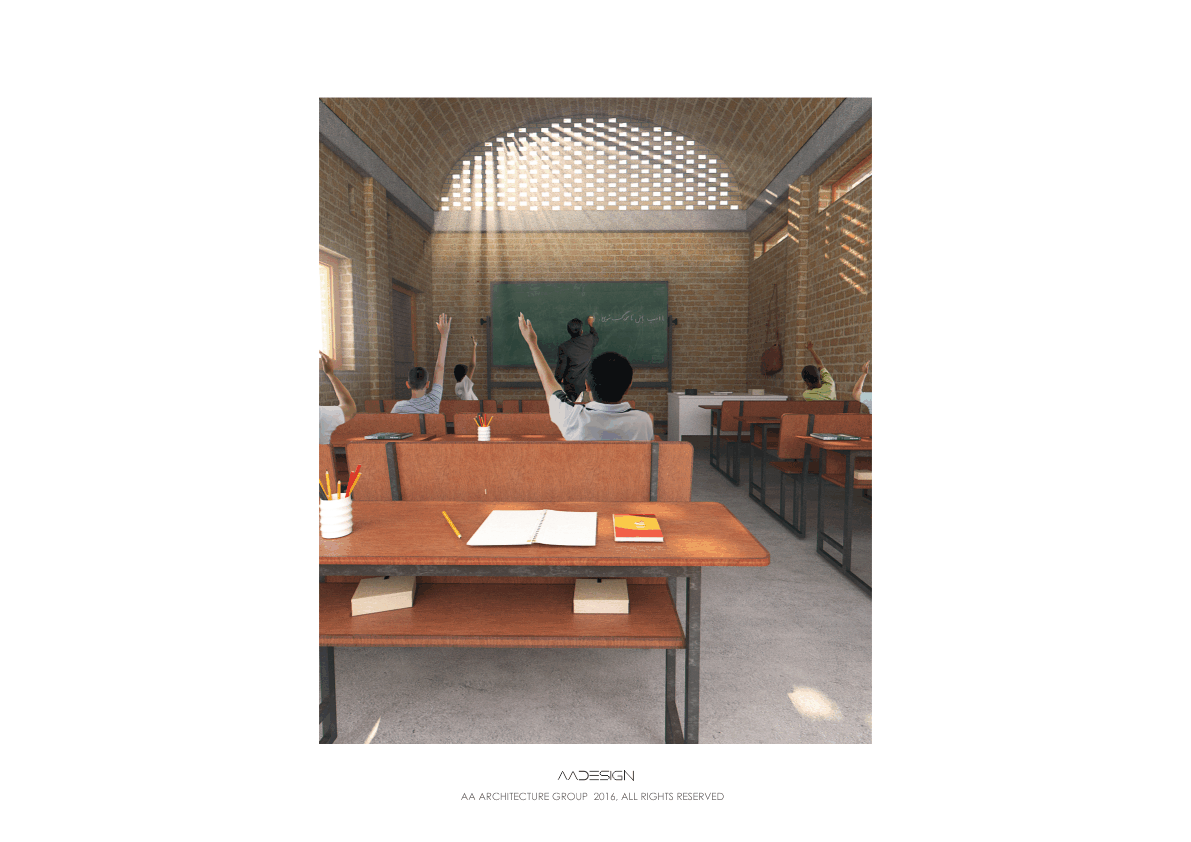
The structure is made primarily of adobe brick, a traditional building material in the region. Adobe bricks, with a small admixture of cement for increased durability.
Traditional Techniques:
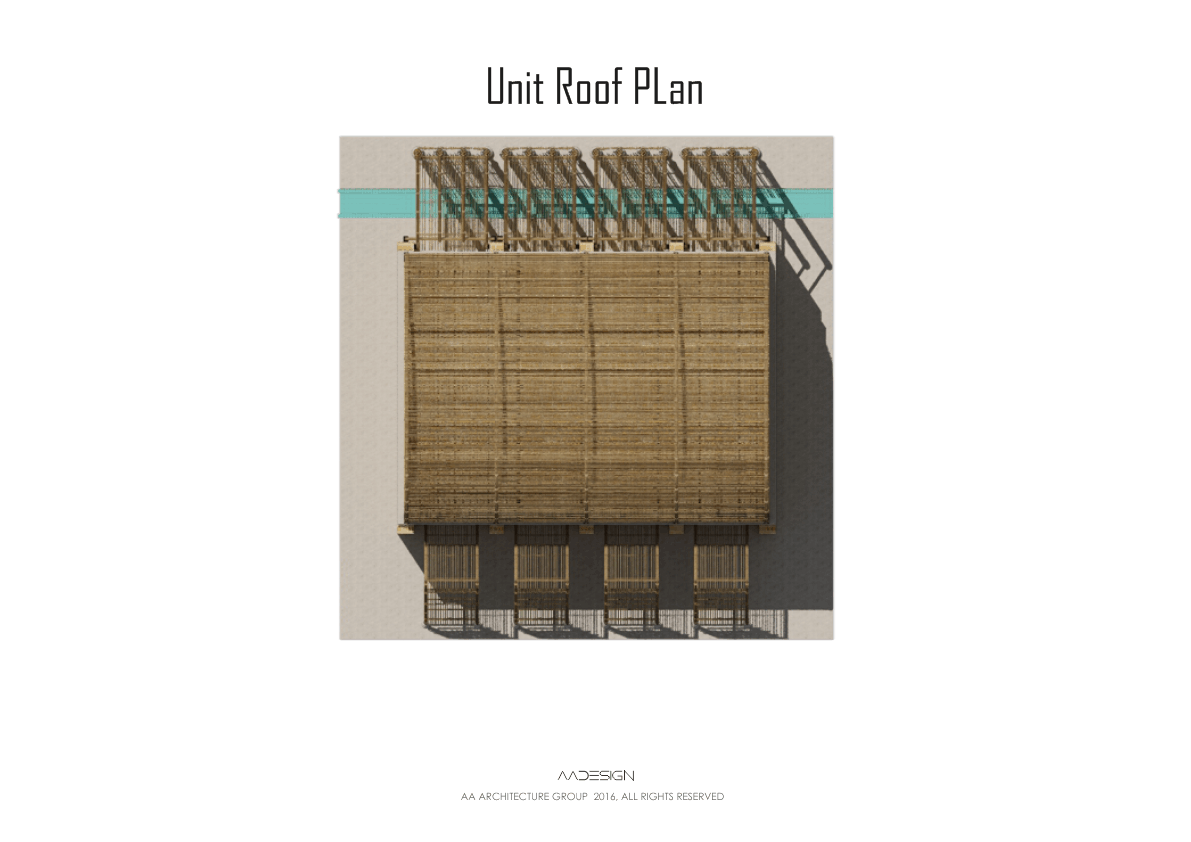
A number of improvements upon local building traditions were introduced, such as a concrete foundation and a concrete ring beam to strengthen the structure and a plastic moisture barrier between the foundation and the walls. Concrete beams run across the load-bearing brick walls under a ceiling of more earth bricks. Residence unskilled laborers to be trained in the building techniques. Creative palm structure designed for double skin roof and Griff-Aitch ( Nannorrhops-Mazzari palm ) shading patterns to control the heat. The project motivates the community by enhancing the skills of laborers where traditional techniques are combined with new know-how.
Buffer Zones:
The building is made of a mixture of adobe brick, shading Griff-aitrch and water conductor, acting as a buffer against temperature and climate changes. These buffer zones are designed to provide natural cooling, lighting, and ventilation through the 6 adoptable unit classes.
Natural ventilation cooling effect:
The natural ventilation cooling effect is enhanced by routing air through ground tubes (tunnels), planting orange trees, and the use of double skin roof and facades to achieves a thermal reduction. The enhanced indoor comfort and condition are far more conducive to education.
Heat Control:
Heat radiates from the ceiling directly into the poorly ventilated classrooms, resulting in interior temperatures of up to 40 ‘c Double skin roof introduces leaf slats to allow air to circulate freely and handmade shelters that protect from rain and also shades the building from the sun. The result is a pleasant climate inside the classrooms even in the extreme summer heat.
A Creation by AA Design Atelier






- Project Name: Dehnu School
- Client: Governmental sectors
- Author Architects: Amirabbas Aboutalebi
- Design Architects: Nakisa Haeri
- Research: Fatemeh Tajik
- Modeling: Mehdi Aboutalebi
- Manufacturers: Consultant
- Site Area: 1500 Sq.m
- Built Area: 350 Sq.m aprox.
- Location: Jiroft, Iran
- Status: National Competition
- Project Year: 2015